

Edge AI in healthcare means running artificial intelligence directly on the device that collects patient data, such as a wearable, bedside monitor, imaging system or room sensor. The device analyzes data in milliseconds instead of sending it to a remote cloud first. This speeds up alerts, keeps sensitive information closer to the patient and lets devices keep working when the network is weak. It is now shaping remote patient monitoring, medical imaging, fall detection and surgical robotics.
Edge AI In Clinical Settings
Edge AI places an AI model close to where data is created. That can be a smartwatch, an ultrasound probe, a hospital gateway or a sensor on the ceiling.
Cloud AI still has a role. It trains models and studies trends across thousands of patients. Edge AI handles the moments that cannot wait, such as spotting an irregular heart rhythm, flagging a fall or guiding a robotic tool.
Most health systems will use both. The cloud learns. The edge acts. For a plain-language primer on the technology behind this shift, see our guide to the AI vision sensor.
Reasons Healthcare Is Moving To The Edge
Speed
Clinical decisions are often time-critical. A cloud round trip adds delay and depends on the network. Local processing removes that dependency. A 2026 systematic review found that edge approaches reduce latency and improve data privacy, especially in patient monitoring. The same review notes that limited device resources and security issues remain open problems.
Privacy
Health data is sensitive. In the US, the HIPAA Security Rule sets safeguards for electronic protected health information. Processing data locally means less of it travels or sits in storage.
Local processing does not make a system compliant on its own. Access controls, encryption and retention policies still matter.
Reliability
Rural clinics, ambulances and many homes do not have steady connections. Edge devices can keep monitoring offline and sync results later.
Power and bandwidth
Wearables run on small batteries. Streaming raw data drains them fast. Sending only results saves energy and bandwidth.
Where Edge AI Is Used In Healthcare Today
Remote patient monitoring and wearables
Wearable health devices with AI can track heart rhythm, movement, oxygen levels and sleep. With remote patient monitoring edge AI, the device flags anomalies on the spot. It alerts the care team only when something needs attention. That cuts alert fatigue and extends battery life.
AI-powered medical imaging at the edge
Radiology leads the field. According to the FDA’s device list, the large majority of authorized devices are imaging tools. Edge processing inside scanners and handheld ultrasound systems can improve image quality, guide positioning and flag urgent findings while the patient is still in the room.
AI-assisted diagnostics support clinicians. They do not replace clinical judgment.
Point-of-care diagnostics
Portable devices in clinics, pharmacies and ambulances can run analysis locally. Point-of-care diagnostics AI brings screening to places without a specialist on site. Some FDA-authorized software, such as a retinopathy screening tool, analyzes retinal images without a specialist reading them.
Smart hospitals
Smart hospital AI uses sensors, gateways and local servers to track equipment, manage patient flow and monitor room occupancy. Keeping this data on site lowers exposure risk. Counts and events can replace raw video.
Fall detection AI for elder care
The CDC reports that falls are the leading cause of injury for adults aged 65 and older, and more than 14 million older adults report a fall each year.
Fall detection AI uses wearables, radar or vision sensors to spot a fall and alert caregivers. Edge processing matters here. A bedroom camera streaming to the cloud feels intrusive. A sensor that detects the event locally and sends only an alert protects dignity as well as safety. You can see how this fits with other sectors in our overview of edge AI use cases.
Surgical robotics
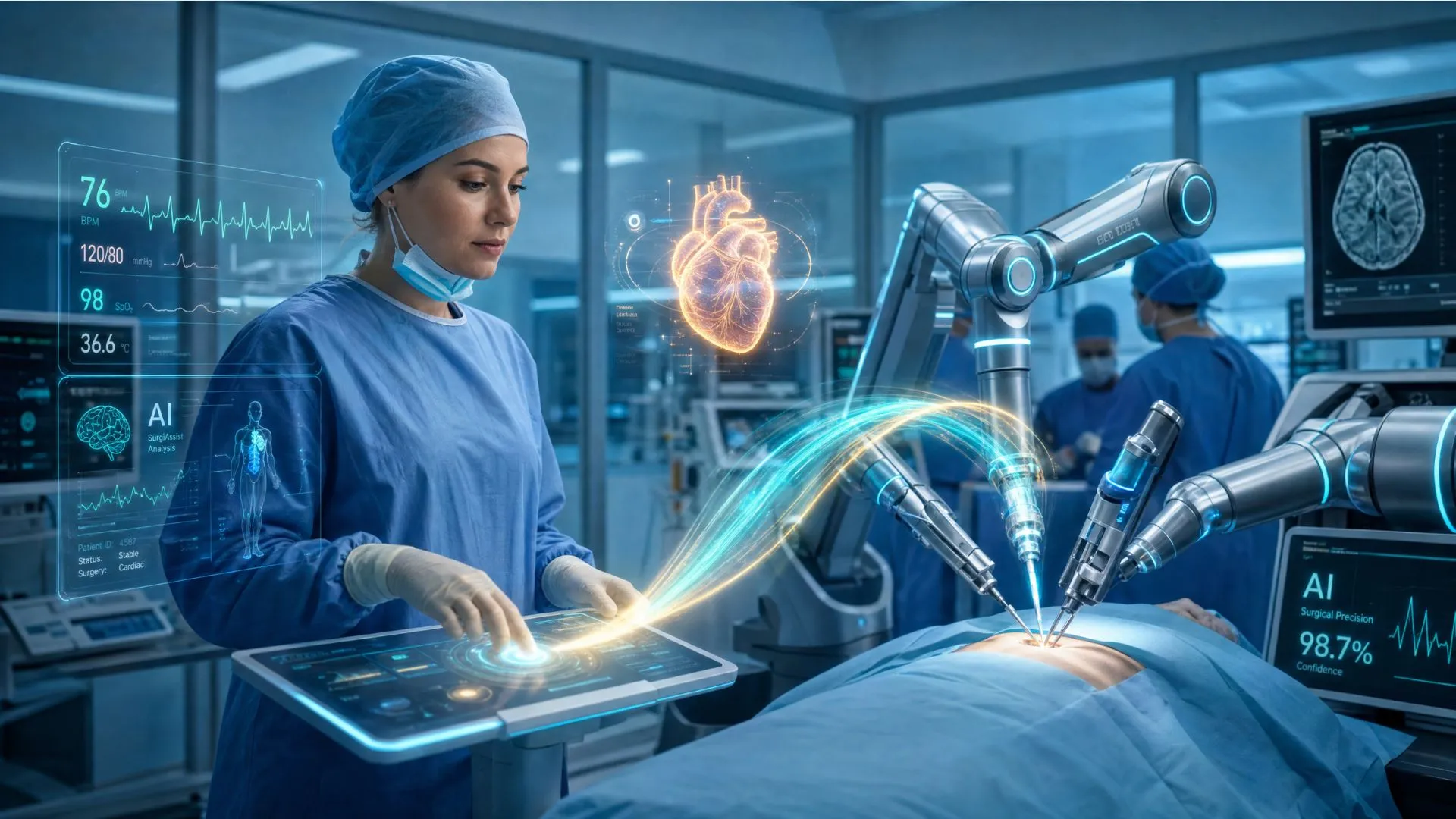
Surgical robots need control loops that stay fast and predictable. Surgical robotics edge AI supports real-time perception, tool tracking and safety checks inside the operating room. It does not rely on an external network to keep a procedure on track.
Intensive care and bedside monitoring
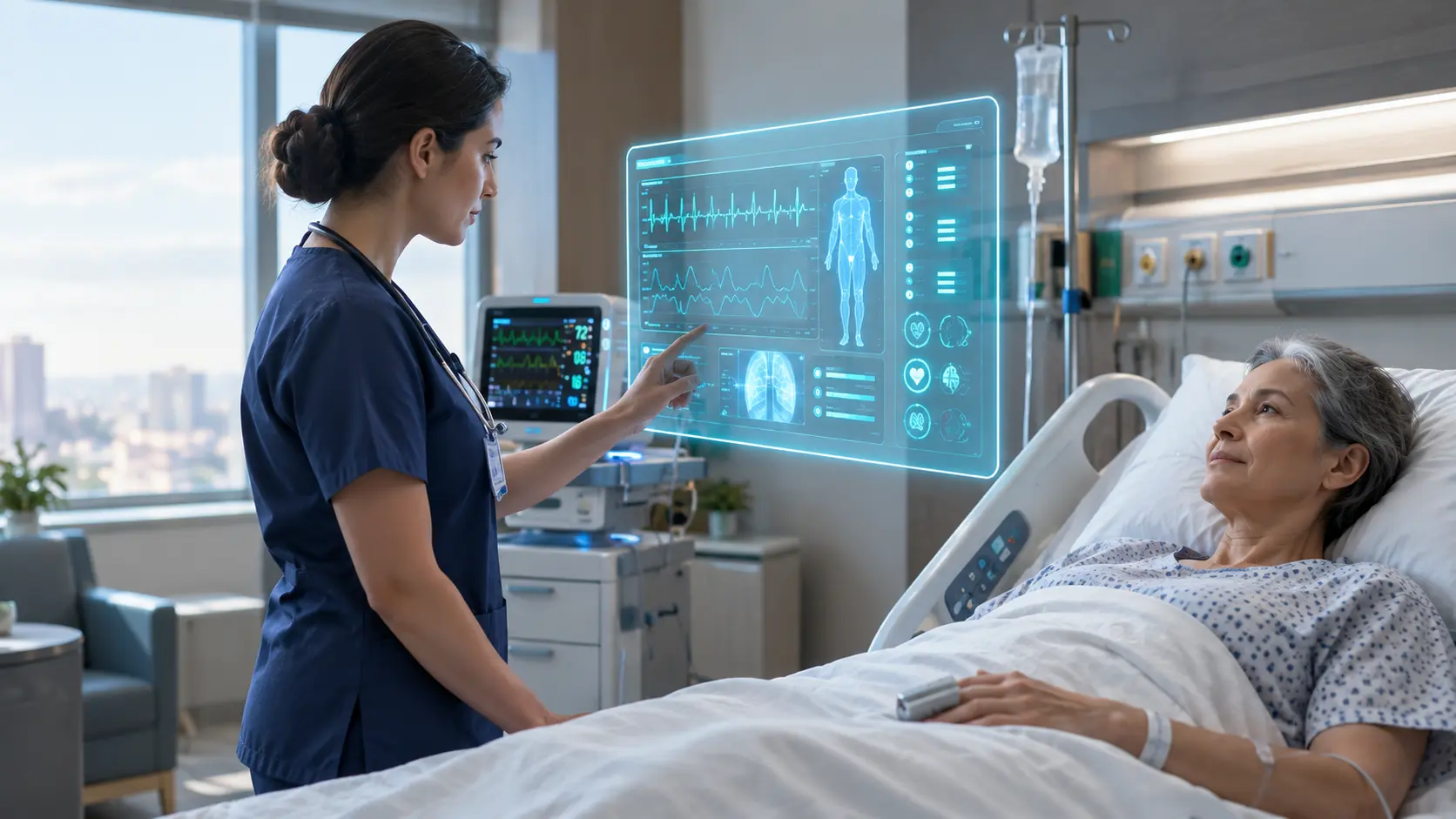
Real-time patient monitoring AI can read vital signs and waveforms at the bedside and flag early warning patterns locally. Nurses get the alert without waiting on the hospital network. Fewer raw waveforms leave the room, which also narrows the data exposed.
Rehabilitation and physical therapy
Motion sensors with on-device AI can track posture and movement during home exercises. The device checks form and shares progress with the therapist. It does not need to send video from the patient’s living room.
Ambulances and emergency response
Portable ECG and ultrasound tools can analyze readings on the way to the hospital, where coverage is often patchy. Crews can pass findings to the emergency department before arrival, so the team is ready.
Infection control and hospital hygiene
Sensors near dispensers and doorways can support hand-hygiene tracking and room-use checks. Reporting counts and events, rather than identifiable video, helps keep staff and patients comfortable with the system.
Challenges Related Edge AI Uses In Healthcare
Limited hardware – Small devices have tight compute, memory and power budgets.
Security – Thousands of connected endpoints create thousands of possible entry points.
Validation and bias – Models must work across age groups, skin tones and care settings. The WHO guidance calls for transparency, accountability, safety and equity.
Regulation – The FDA authorizes specific devices, not the technology itself. Most AI-enabled devices reach the market through the 510(k) pathway.
Updates – Improving a model across a large fleet of devices takes planning.
Future Of Edge AI In Healthcare
The next step is moving intelligence closer to the sensor itself. When a sensor filters data at the point of capture, less information has to travel and less personal data is exposed. Privacy-preserving methods such as federated learning, which trains models without pooling raw patient data, are also gaining ground.
These ideas are possibilities, not finished products.
Ambient home health sensing
Low-power sensors in a home could track gait, breathing and posture over weeks. They would flag slow changes that a single clinic visit misses. Because the analysis stays on the device, no video would need to leave the house.
Personalized on-device health models
A wearable could learn its owner’s normal baseline and adapt to it over time. It would flag meaningful deviations instead of applying one rule to everyone. Personal data would stay on the device.
Self-contained diagnostic kits for remote areas
Compact kits could screen for common conditions without any connection. Field clinics, disaster zones and mobile outreach teams would get results on the spot. Findings would sync later, once a network is available.
Edge AI Vision With Oculi
Oculi builds programmable vision sensors that process information at the pixel and transmit only what a system needs to act on. According to the company, raw images stay on the chip, power draw is low and decisions happen in under 5 milliseconds. These traits suit always-on, battery-powered products, including wearables and smart devices. You can read more on the OCULI SPU.
Oculi is a semiconductor company, not a medical device maker. Any healthcare product built on its sensors would still need to meet the regulatory and clinical requirements above. Teams exploring privacy-first vision for connected devices can start with the evaluation programs.
Frequently Asked Questions
How is edge AI different from cloud AI in healthcare?
Cloud AI processes data in remote data centers. Edge AI processes it on or near the device. The cloud suits model training and large-scale analysis. The edge suits fast, private, low-power decisions.
Does edge AI improve patient privacy?
It can. Processing data locally reduces how much identifiable information is transmitted or stored. It does not guarantee compliance. Security, access control and retention rules still apply.
Can edge AI work without an internet connection?
Yes. Inference runs on the device, so monitoring and alerts can continue offline. Updates, dashboards and cloud analytics need a connection.
Is edge AI approved for medical use?
The FDA authorizes individual devices, not categories of technology. A product that makes diagnostic or treatment claims generally needs authorization. Check the FDA’s public device list for specific products.
What are the main risks of edge AI in healthcare?
The main risks are limited device resources, security gaps across many endpoints, biased models and difficult fleet updates. Clinical validation and human oversight reduce these risks.
How does fall detection AI protect privacy?
On-device processing can detect a fall and send only an alert, not video. Radar and low-detail sensors can reduce the need to capture identifiable images at all.