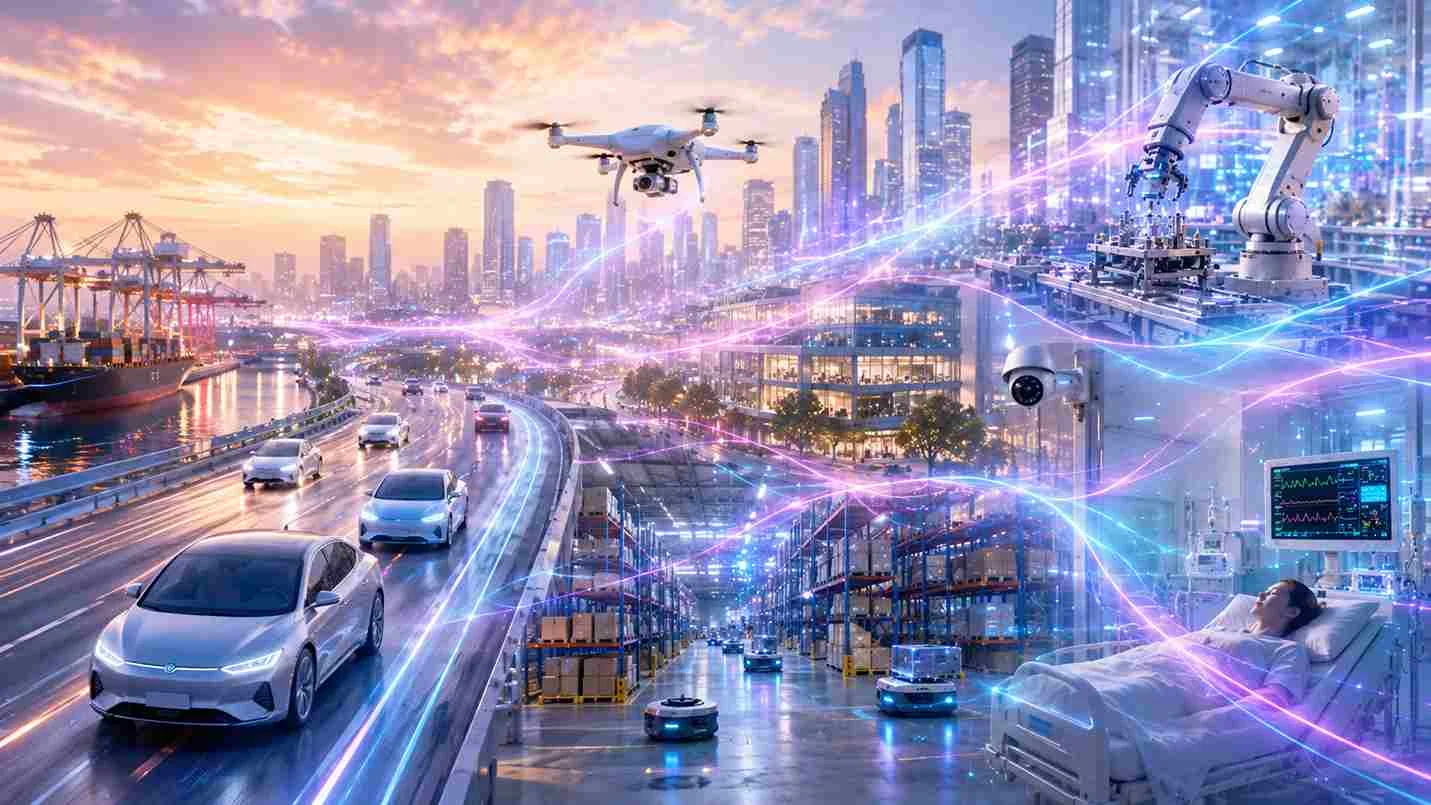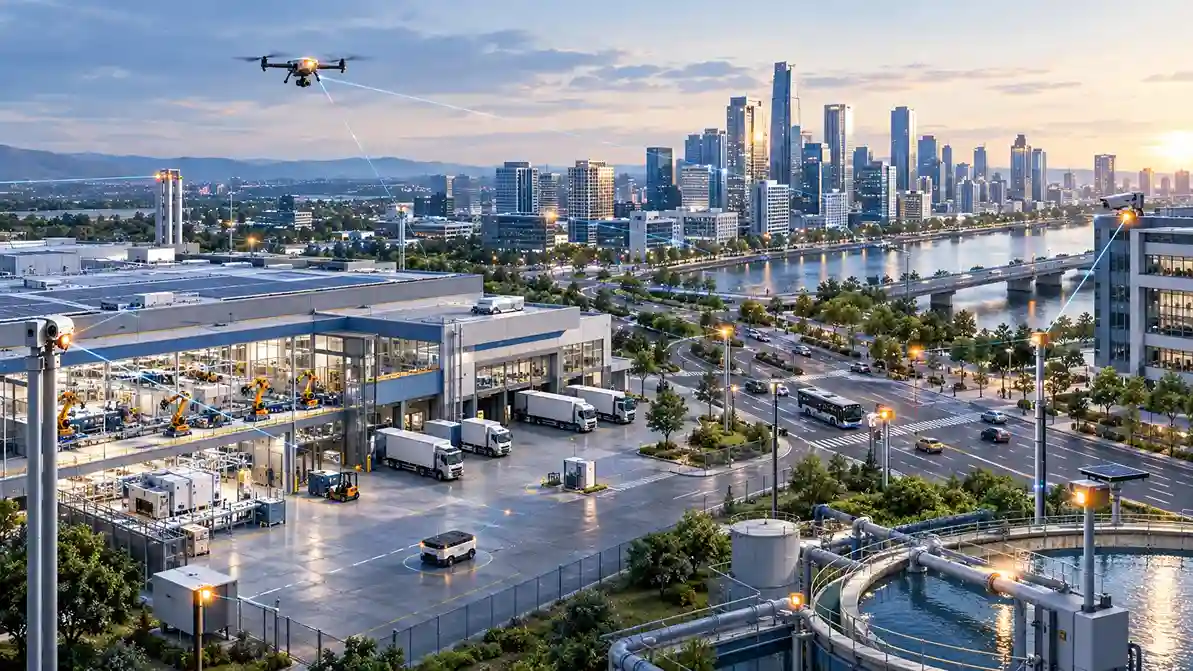
Edge AI analyzes data near its source. This could be a device, camera, sensor, or nearby gateway. It does not need to send every decision to a remote data center.
Edge AI is useful when speed, connectivity, power, or bandwidth is limited. It can also help improve data privacy.Computer vision is a key use case. Edge AI also works with vibration, audio, temperature, radar, and other sensor data.
This guide explores real-world edge AI applications across industries. It explains the benefits, key challenges, and trade-offs to consider when choosing an edge AI architecture.
What Is Edge AI?
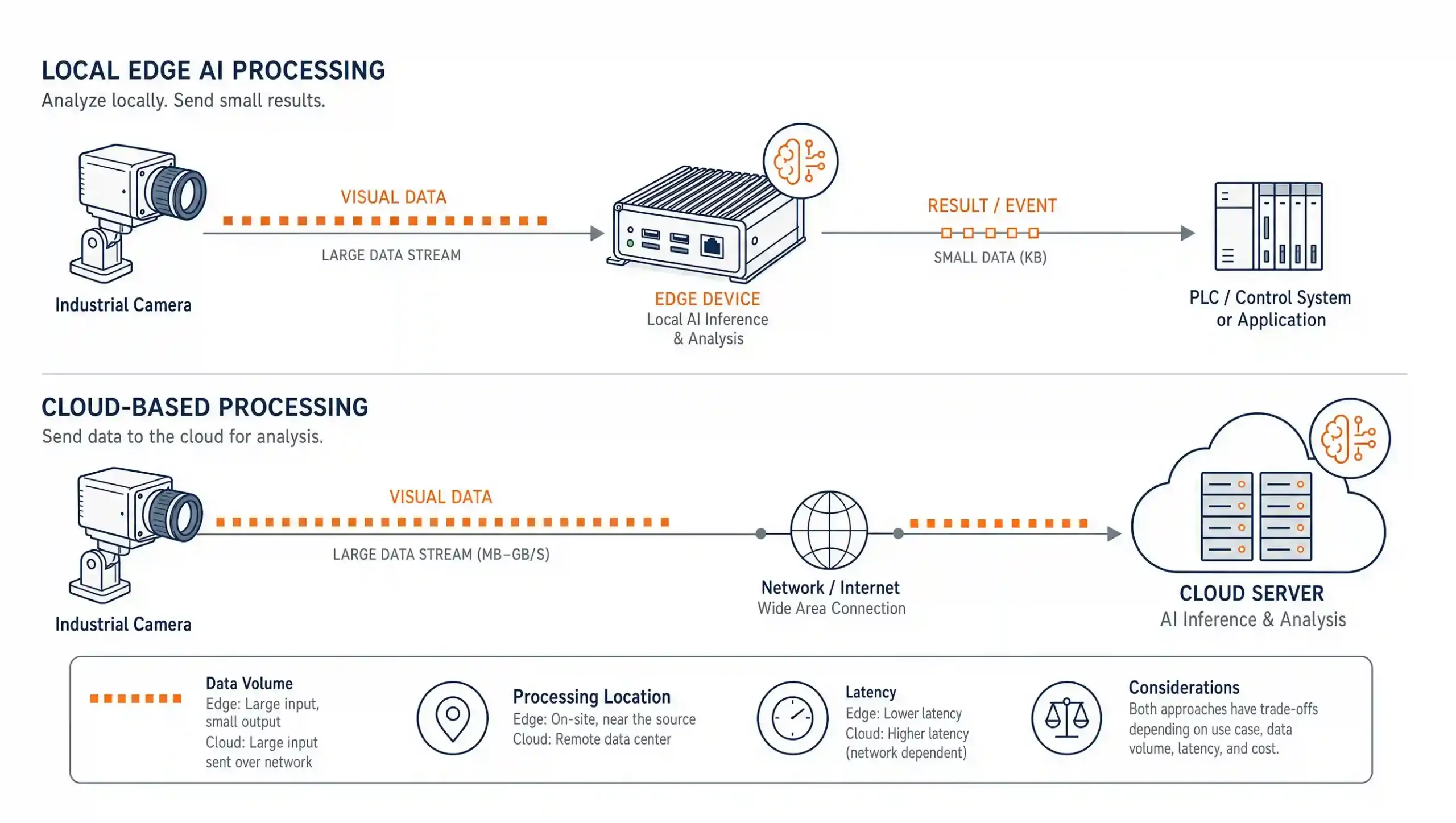
Edge AI means running AI models close to where data is created, on a sensor, a camera, a gateway or the device itself, rather than sending everything to the cloud first.
Cloud AI is still the right place to train models and analyze data across thousands of sites. Edge AI handles the part that cannot wait: seeing, deciding and acting in the moment.
The edge is also not one place. It can be a gateway in a closet, a processor beside a camera, or the sensor itself. That difference matters, and we come back to it in the architecture comparison below.
Edge AI Use Cases by Industry
The sections below group representative edge AI applications into 28 industry areas. They are examples, not an exhaustive inventory: the right fit depends on the decision being made, sensor type, operating conditions, compute budget and consequences of an error.
A quick cross-industry view: edge processing is valuable when it changes the operating outcome, but every deployment still needs to account for accuracy, cost, maintenance and risk.
You will notice the same capabilities returning again and again: presence, counting, movement, inspection and anomaly detection. A sensor that does one of these well can serve many industries, which is why software-defined vision matters later in this guide.
Smart Buildings and Automation
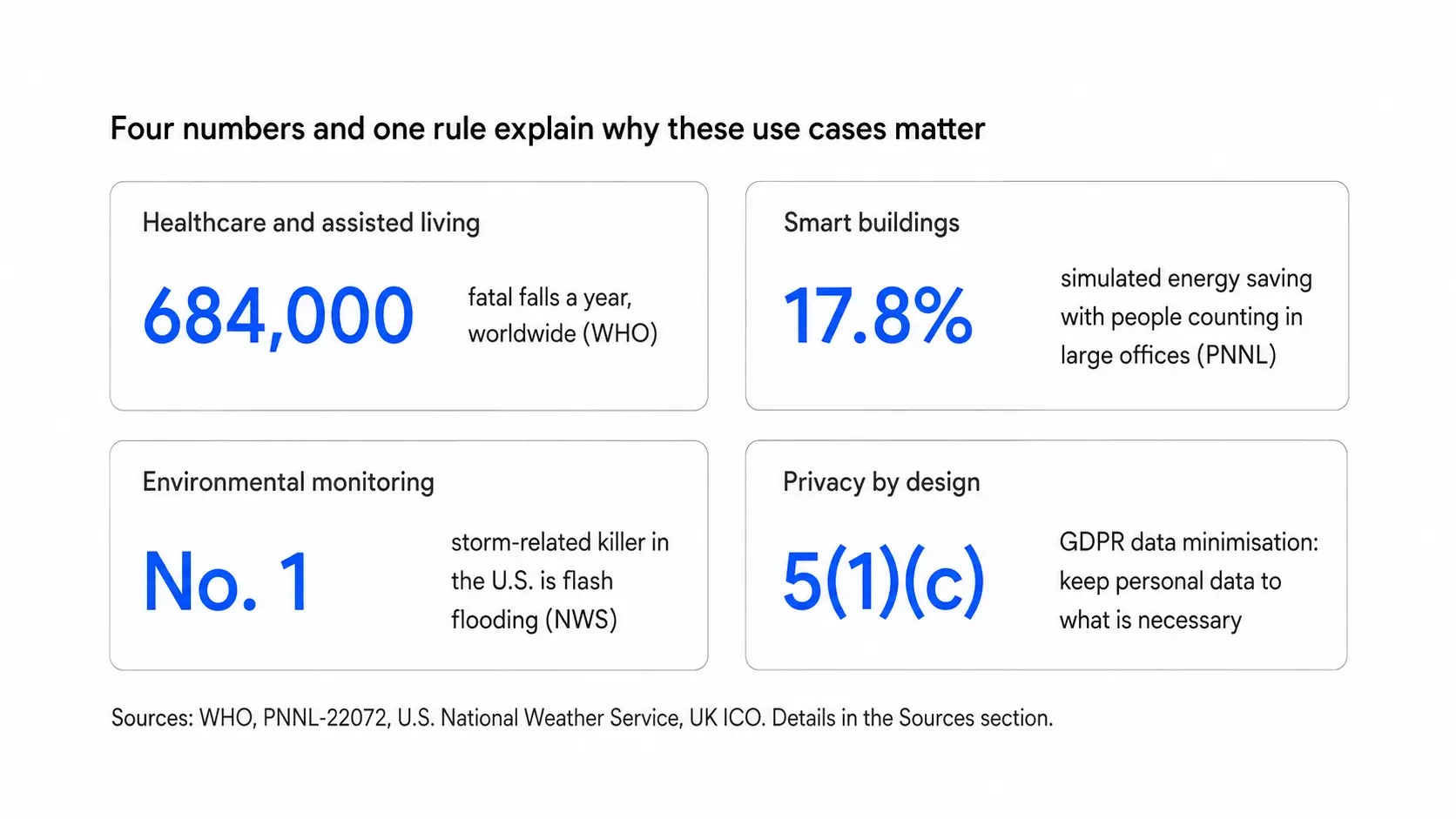
Buildings waste energy when their systems do not know who is in a room. A Pacific Northwest National Laboratory simulation of large office buildings, supported by the U.S. Department of Energy, estimated 17.8 percent average energy savings with advanced occupancy sensors, compared with 5.9 percent for common occupancy sensors.
Counting people gives building systems more useful information than simply detecting motion. This helps adjust lighting and heating, ventilation, and air conditioning (HVAC) based on actual occupancy. Processing data locally and reporting counts instead of storing identifiable images can also help protect privacy.
Smart Cities and Urban Infrastructure
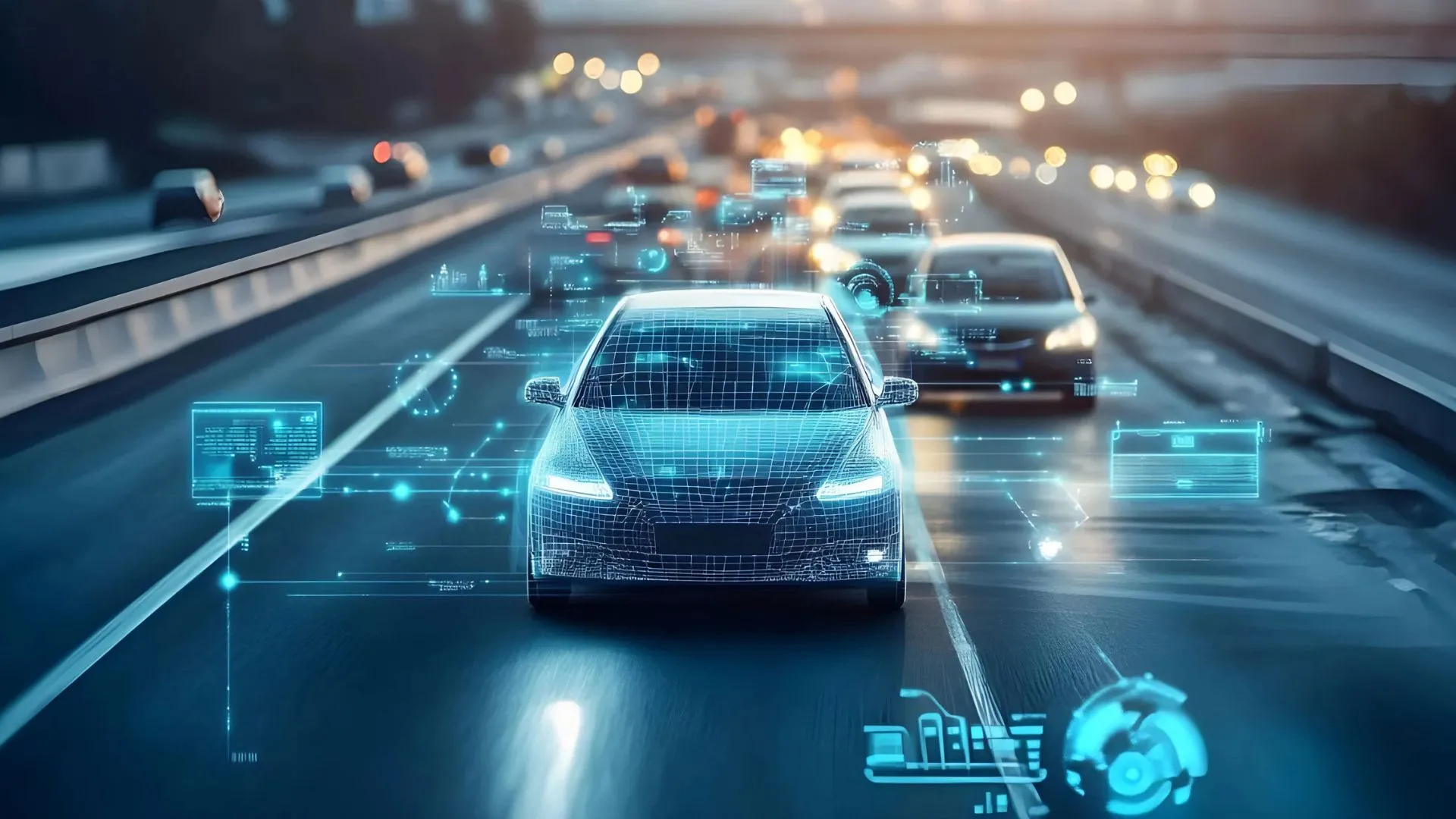
A city needs awareness across thousands of locations at once. Streaming raw video from all of them to a central server is costly and invasive, so counting and classifying on site, then reporting only the result, scales far better.
- Traffic-flow monitoring and signal timing support
- Vehicle classification and pedestrian counting
- Parking-space occupancy detection
- Crowd-density estimation at public venues
- Road and infrastructure visual inspection
- Rainfall, drainage and flash-flood monitoring
- Privacy-conscious public-space analytics
Industrial Automation and Manufacturing
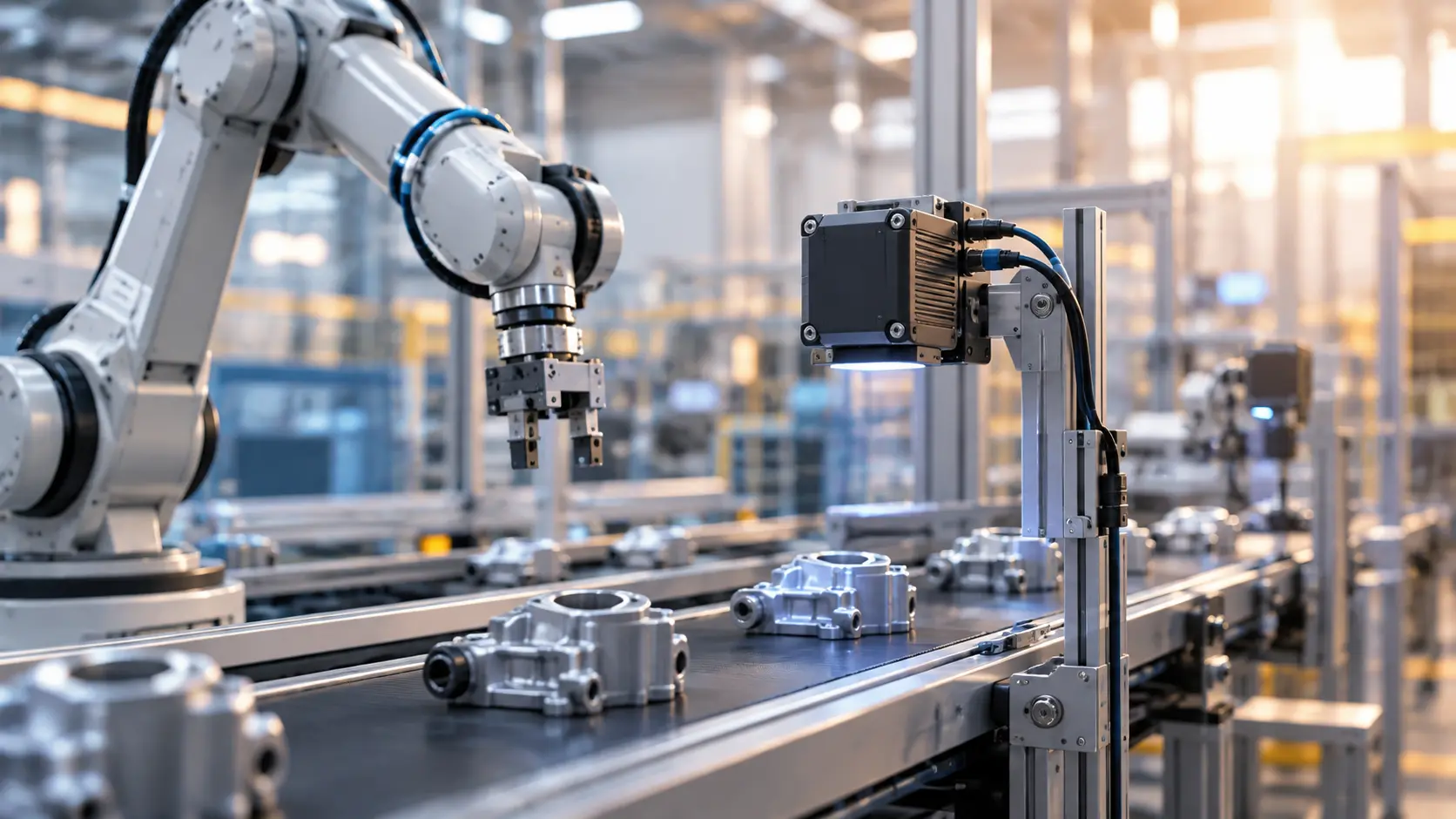
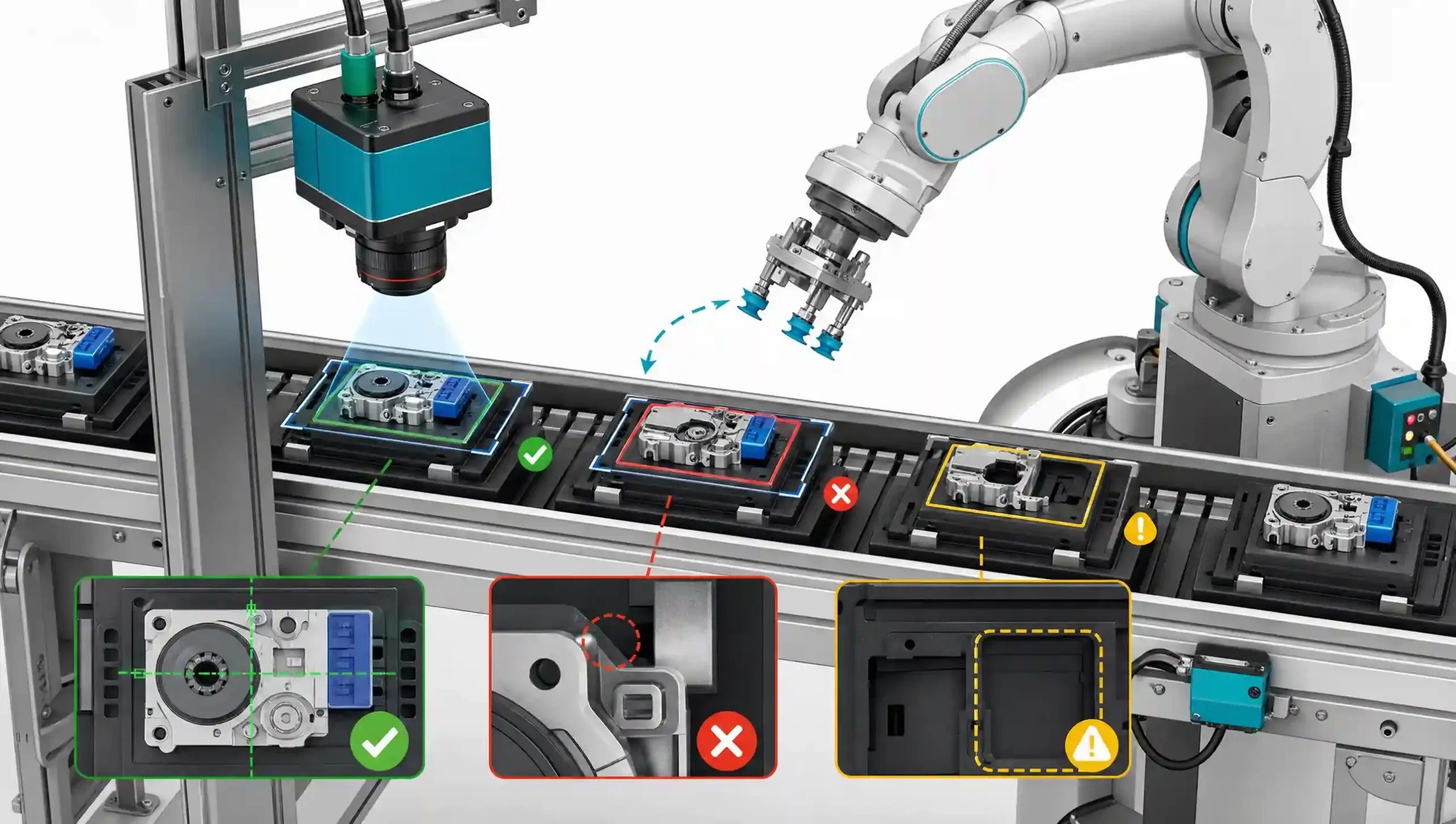
On a production line, a few milliseconds of delay can mean a missed part. Local perception keeps the response close to the machine and avoids pushing every frame through a shared network.
For a closer look at inspection and robotics read intelligent vision sensors for industrial automation.
- Visual inspection and product-defect detection
- Assembly verification and component counting
- Conveyor, packaging and labeling checks
- Object position detection for robotic pick-and-place
- Machine-state and process monitoring
- Restricted-zone and workplace-safety alerts
- Visual anomaly detection to support maintenance
Robotics and Autonomous Systems
A robot needs a short loop between seeing and acting, and every watt spent on perception shortens its working day. Machine vision at the edge trims both the delay and the power bill.
- Obstacle detection and local navigation support
- Object detection, tracking and visual localization
- Autonomous mobile robot and warehouse robot perception
- Human-robot interaction and gesture control
- Drone-based perception
- Real-time visual decision support
Defense and Unmanned Systems
Edge AI enables unmanned systems, such as drones and ground robots, to analyze their surroundings and respond to changing conditions in real time. It supports applications such as object detection, obstacle avoidance, navigation, and perimeter monitoring. Processing data locally can also reduce dependence on continuous communication with a remote operator, especially in environments with limited connectivity.
- UAV and unmanned ground vehicle perception
- Perimeter intrusion and movement detection
- Remote-site monitoring where connectivity is limited
- Low-power situational awareness
- Vision for size-, weight- and power-constrained platforms

AR/VR, Wearables, and Smart Devices
Headsets, glasses and wearables have tiny batteries and strict heat limits, yet gesture and eye tracking must respond instantly. Always-on sensing only works if it costs very little energy.
- Gesture and hand tracking
- Eye tracking and gaze estimation
- Head and body movement tracking
- Always-on interaction with constrained power and thermal budgets
- On-device sensing that minimizes transfer of personal imagery
Smart Retail and Commercial Spaces
Retailers want to know how many people visit, where they queue and which shelves run empty, without building a database of faces. Counts and flows are enough for most of those decisions.
- Footfall and queue-length measurement
- Shelf availability and product-presence checks
- Store-zone utilization and people-flow analytics
- Checkout and inventory process assistance
- Privacy-conscious shopper analytics using counts or events
Warehousing and Logistics
Warehouses mix people, forklifts and fast-moving packages. Speed and safety both depend on quick local perception, not on a cloud round trip.
- Package presence, dimension and label checks
- Forklift and pedestrian proximity alerts
- Conveyor monitoring and parcel sorting
- Dock and loading-zone activity detection
- Robot navigation and inventory movement tracking
Healthcare and Assisted Living
The World Health Organization estimates that 684,000 people die from falls each year, making falls the second leading cause of unintentional injury death worldwide.
Contactless monitoring that can flag a fall without sending video of a bedroom to the cloud protects dignity as well as safety. These systems support clinicians and carers. They do not replace them.
- Fall-event detection and caregiver alerts
- Room-presence and movement monitoring
- Equipment and supply availability checks
- Visual workflow support in clinical settings
- Local processing to reduce unnecessary transfer of identifiable imagery
Agriculture and Precision Farming
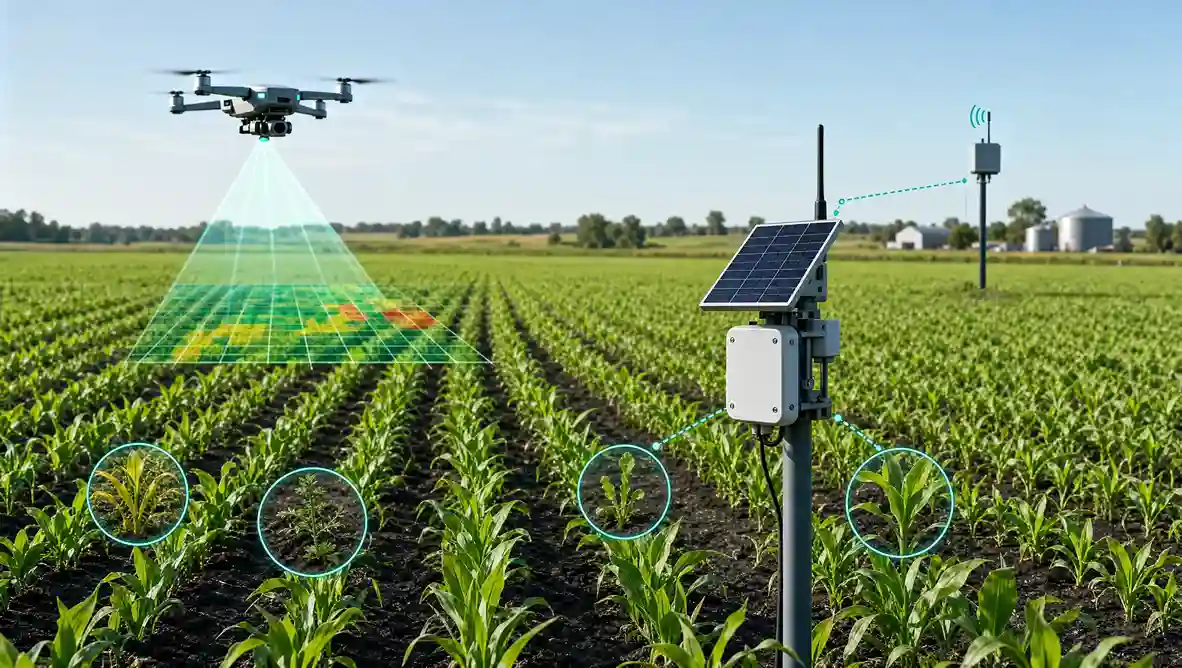
Fields often have patchy connectivity and little mains power. Perception that runs locally, on a small battery or a solar panel, is practical where a cloud-dependent camera is not.
- Crop and weed detection
- Plant-growth and disease indicators from images
- Livestock counting and movement monitoring
- Irrigation and equipment status monitoring
- Drone-based field assessment in low-connectivity locations
Automotive and Transportation
Inside and around a vehicle, perception has to be fast, always on and independent of mobile coverage. Cabin sensing also involves people, so keeping images local matters.
- Driver and cabin-state monitoring
- Occupant and seat-belt checks
- Road-user and obstacle detection support
- Fleet and vehicle-condition inspection
- Local processing for time-sensitive functions, subject to system safety requirements
Smart Homes and Consumer Electronics
The home is the most privacy-sensitive setting of all. Arm notes that on-device processing lets home devices respond to motion, heat or sound without needing the cloud, which means faster reactions and less data leaving the house.
- Presence and gesture-based control
- Appliance-state and safety-event detection
- Pet and object detection
- Local audio or visual triggers
- On-device decisions that reduce cloud dependence
Energy, Utilities, and Infrastructure
Substations, solar farms and pipelines sit in remote places where sending a technician is expensive. Local anomaly detection tells you when a visit is actually needed.
- Visual inspection of solar panels and equipment
- Substation and perimeter anomaly detection
- Pipeline and asset-condition monitoring
- Thermal, vibration and electrical-signal anomaly detection
- Remote-site alerts where technician visits are costly
Environmental Monitoring and Disaster Management
The U.S. National Weather Service calls flash flooding the number one storm-related killer in the United States. Flash floods can develop within minutes to hours of heavy rain, so sensors that estimate rainfall intensity or water level on site can feed early warnings without waiting on a network.
- Rainfall intensity and flood-risk indicators
- Water-level and drainage monitoring
- Wildlife and habitat observation
- Smoke, fire or environmental anomaly detection with appropriate sensors
- Local alerts where communications may be delayed
Workplace Safety and Occupational Monitoring
A local alert reaches a worker faster than one that detours through the cloud, and it can be raised without recording the person at all.
- Restricted-zone entry alerts
- PPE and safety-condition checks
- Vehicle-worker proximity warnings
- Smoke, spill or hazardous-condition detection
- Safety analytics designed to minimize unnecessary personal-data collection
Education and Smart Campuses
Campuses combine large buildings with many shared rooms. Occupancy data is valuable for planning and energy savings, while surveillance of students is unwelcome, so anonymous counts suit the setting well.
- Classroom and shared-space occupancy
- Room scheduling and energy optimization
- Queue and campus-flow measurement
- Equipment and facility inspection
- Privacy-conscious reporting of aggregate counts
Mining, Construction, and Heavy Equipment
Dust, distance and moving machinery make these sites dangerous and hard to connect. Vision that works locally gives equipment operators awareness of people nearby even when the network is weak.
- People-equipment proximity detection
- Restricted-zone and hazard alerts
- Visual inspection of structures and machinery
- Vehicle and equipment-state monitoring
- Local perception in dusty, remote or low-connectivity environments
Smart Security and Access Control
Most security footage is never reviewed. Edge AI can analyze video in real time and flag unusual activity.
It can detect intruders, identify unauthorized entry, and measure queues. This helps security teams focus on important events.
Instead of sending all footage to a central system, it can process video locally and share only relevant events. This reduces unnecessary data sharing and supports better privacy controls.
Space and Extreme Environments
Where communication is slow, intermittent or impossible, a platform has to understand what it sees on its own. Power is scarce, and every unnecessary transmission counts.
- Local object and terrain perception
- Equipment-state monitoring
- Autonomous inspection support
- Anomaly detection when communication is delayed or unavailable
- Power-aware inference for constrained platforms
Smart Hospitality and Hotels
Hotels run large, partly empty buildings. Knowing which rooms and common areas are in use lets them heat, cool and light only what guests are actually using.
- Room and shared-space occupancy
- Lighting and HVAC optimization
- Queue and service-flow measurement
- Facility-condition inspection
- Aggregate analytics designed to avoid unnecessary guest identification
Food Processing and Quality Control
Fast lines and strict hygiene rules leave little room for slow inspection or bulky equipment. Local vision can check every item at line speed and flag only the exceptions.
- Product and packaging defect detection
- Label, seal and fill-level inspection
- Foreign-object detection where suitable sensors permit
- Line-speed counting and sorting
- Process anomaly detection and exception alerts
Airports, Railways, and Public Transport
Stations and terminals handle huge crowds, and passengers expect privacy. Counting and flow measurement at the sensor gives operators the picture without recording faces.
- Passenger-flow and queue measurement
- Platform and restricted-zone monitoring
- Baggage and package-flow checks
- Crowd-density estimation
- Local incident alerts during network disruption
Why Vision Drives So Many Edge AI Use Cases
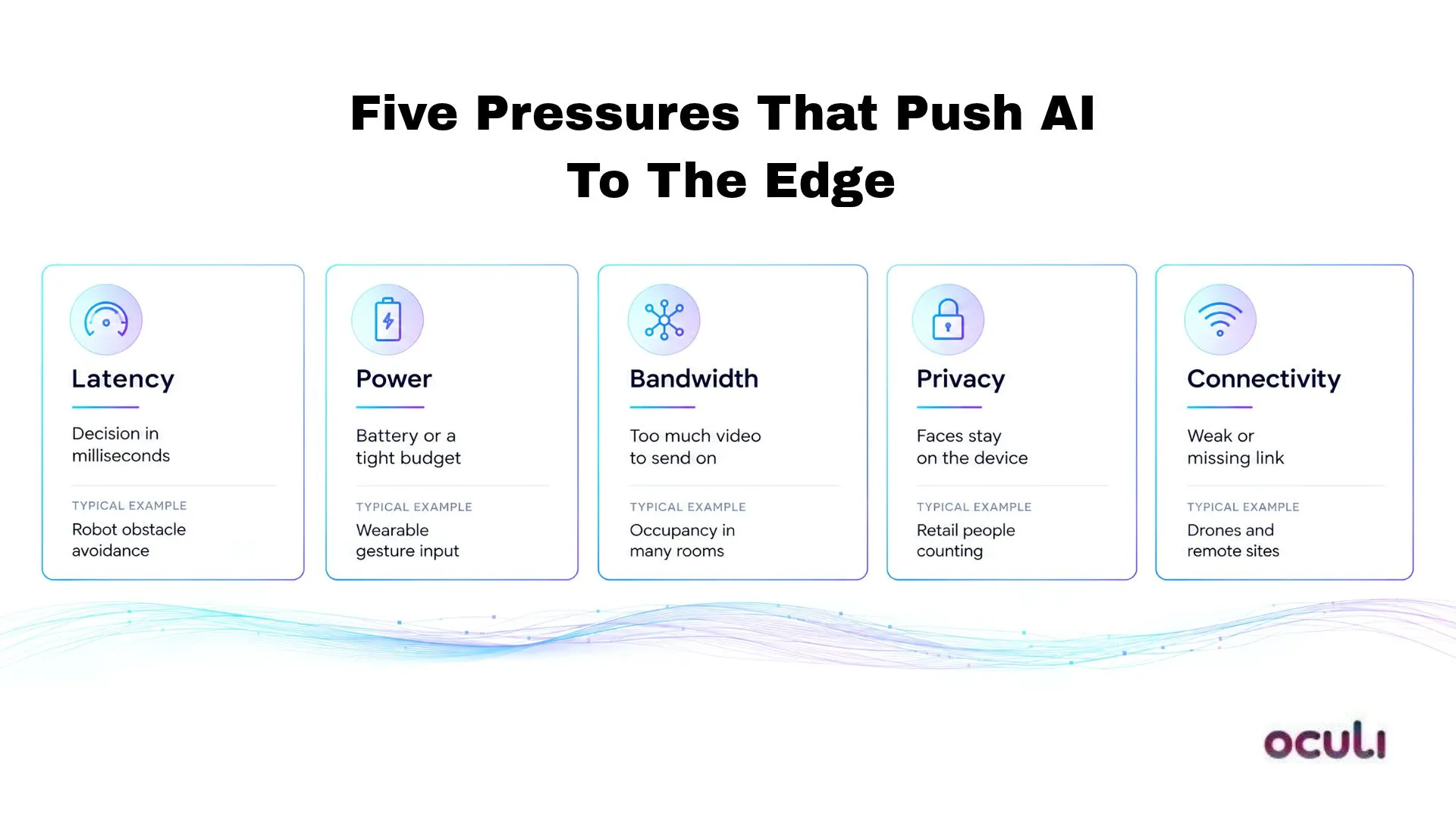
Video is the heaviest data most devices ever produce. One camera streaming around the clock can swamp a network, drain a battery and capture images of people who never agreed to be recorded.
Latency
A robot arm, a vehicle or a safety alert cannot wait for a round trip to the cloud.
Power
Battery-powered and always-on devices cannot afford to run a full video pipeline.
Bandwidth
Sending every frame upstream is costly, and most frames contain nothing new.
Privacy
Keeping identifiable images on the device supports the data minimisation principle
in Article 5 of the GDPR, which asks that personal data be limited to what is necessary for its purpose.
Connectivity
Remote sites, vehicles and drones may have a weak link or none at all.
The same pressures explain why design effort is moving closer to the sensor. When the pixel array itself can decide what matters, fewer frames travel, fewer watts are spent and less personal imagery leaves the device.
If you want the technical background first, start with this guide to the AI vision sensor.
Why Edge AI Matters For Different Industries
Edge AI is a means, not a goal. These figures show the real problems that many of the use cases below are aimed at.
Frequently Asked Questions About Edge AI Use Cases
What are the most common edge AI use cases?
Common applications include visual inspection, occupancy and people counting, robotics, access-event detection, predictive maintenance, local speech recognition and equipment anomaly detection. The best fit depends on the signal being analyzed and whether local response, limited connectivity, power or data handling is a real constraint.
What is the difference between edge AI and cloud AI?
Cloud AI processes data in remote data centers, which suits training models and analyzing many sites together. Edge AI processes data on or near the device, which suits decisions that must be fast, private, low-power or independent of the network. Many systems use both.
What are the disadvantages of Edge AI?
Edge devices have limited compute, memory and power compared with cloud servers. Models may be harder to update across a large fleet, and each device needs monitoring, security controls and a plan for failures. Some workloads still need cloud-scale analysis or human review.
Is Edge AI the same as the Internet of Things (IoT)?
No. IoT connects devices and collects or exchanges data; Edge AI runs AI inference near the data source. An IoT device may use simple rules without AI, while an Edge AI device may analyze data locally and send only selected results through an IoT network.
Does Edge AI always work offline?
Not always. Local inference can continue without internet access if the model, required data and control logic are available on the device. Remote updates, central dashboards, fleet analytics or cloud-dependent services may still require connectivity.
How should a business measure Edge AI ROI?
Compare the pilot with a baseline. Measure response time, bandwidth, energy use, false alarms, missed events, maintenance effort and the operational cost of errors. Include hardware, deployment, model updates and support not only the cost of sending less data.
When is cloud processing still the better option?
Cloud processing can be preferable when latency is not critical, connectivity and bandwidth are sufficient, a large model is needed, or centralized analysis across many sites matters more than local autonomy. Many deployments combine local inference with cloud training, fleet management and long-term analytics.
Video produces large volumes of data, and moving it costs bandwidth, power and privacy. With edge AI vision, only results travel instead of raw footage. LF Edge describes computer vision as the leading edge AI application for exactly this reason.
Does edge AI improve privacy?
It can reduce exposure when identifiable images are processed locally and the system retains or transmits only necessary counts or events. But local processing does not automatically make a system anonymous or compliant. Camera placement, access, retention, security, notice, purpose limitation and applicable law still matter.
What is in-pixel computing?
In-pixel computing places processing circuitry at the level of individual pixels or small pixel groups, so some decisions are made where light is captured. This reduces how much raw data has to leave the pixel array.
What are intelligent vision sensors?
Intelligent vision sensors embed computation in the pixel array or sensing layer, so a system extracts task-relevant information at the point of capture instead of streaming every full frame to a processor.
Is edge AI the same as sensor-level processing?
No. Edge AI can run on a gateway or processor that still receives full frames from the camera. Sensor-level processing changes what the sensor sends in the first place. The two can be combined.
Which industries benefit most from low-power vision?
Those with battery-powered, always-on or size-constrained devices: wearables, AR and VR, robotics, drones, defense platforms, large building networks, remote infrastructure and agriculture.
Can edge AI work without an internet connection?
Yes. Because inference runs locally, a device can keep sensing and acting offline, then share summaries when a link becomes available.
What is software-defined vision?
A software-defined vision sensor can be reconfigured after manufacture for different detection tasks, output formats or power profiles, so one hardware design can serve several products.