

Why AI vision sensor evaluation is harder than it looks
Most machine-vision systems pair a camera with a computer. The camera is a CMOS image sensor built to capture pictures for people, so it streams millions of pixels whether or not they matter to the AI model downstream. That costs power, adds latency and sends identifiable images off the device.
This is why teams building always-on edge AI vision products struggle to benchmark realistically.
A fully programmable AI vision sensor changes what you measure: instead of image quality, you evaluate how little data the sensor needs to hand over for the AI to make a correct decision.
That shift is the reason a dedicated evaluation path matters. You need to test the sensor on your own scenes, with your own models and power budget, before committing to a design.
What the Oculi evaluation program offers
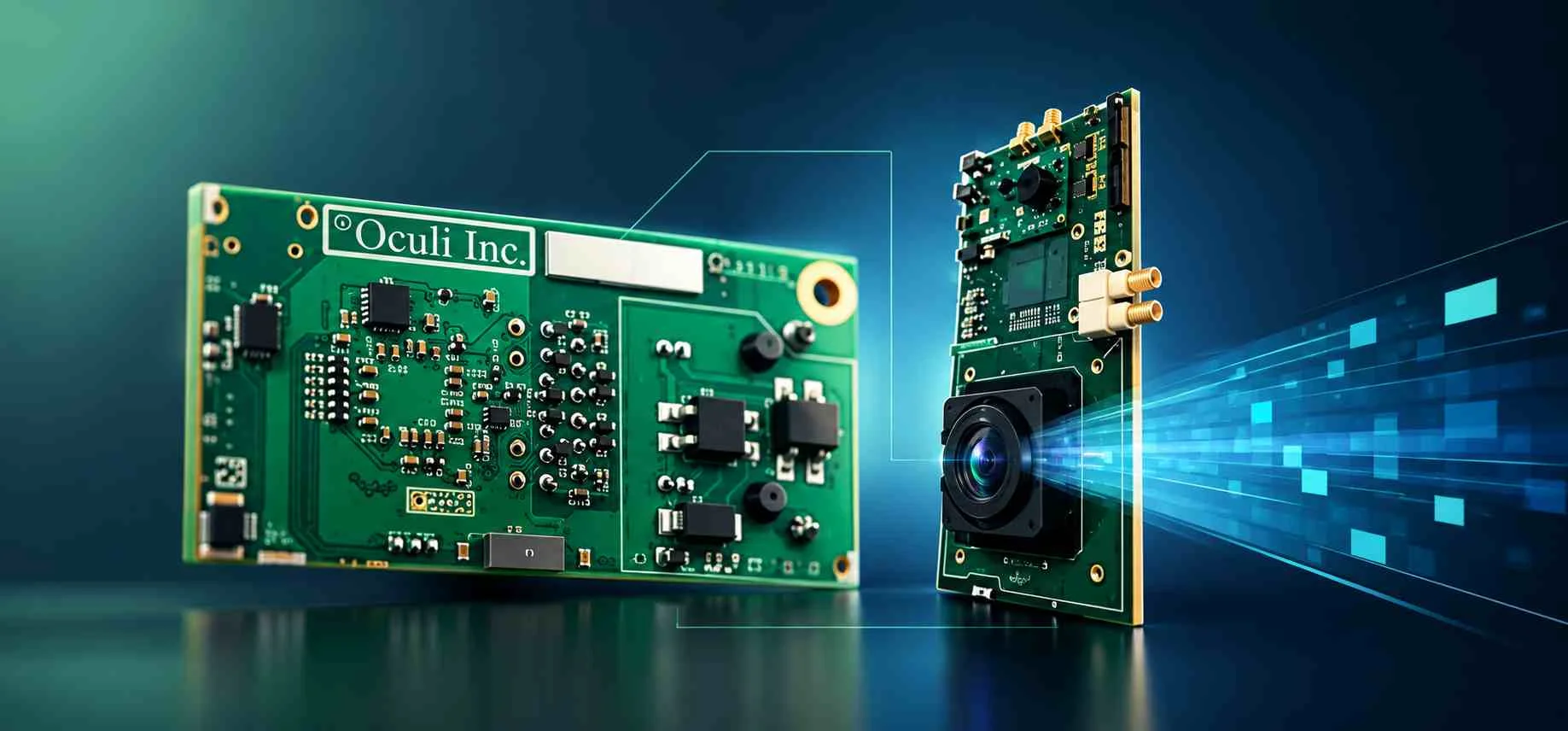
The Oculi evaluation program lets you test the OCULI SPU (Sensor and Processing Unit), the software defined vision sensor that processes at the pixel and sends only decisions, on your own application. It has three entry points: the Magenta Evaluation Kit, the Burgundy Evaluation Kit and free software simulators.
Who the evaluation programs are for
The programs are designed for developers, engineers and technical teams building custom visual AI applications. They suit organizations of any size, from startups to large enterprises, so the right choice depends on your use case more than on your company.
Magenta Evaluation Kit
The Burgundy Evaluation Kit is a specialized version of Magenta focused on presence detection applications. It is best suited for use cases such as building automation, including lighting and HVAC control, as well as security, occupancy monitoring, and access control systems.
Burgundy Evaluation Kit
The Burgundy Evaluation Kit is a specialized version of Magenta focused on presence detection applications. It is best suited for use cases such as building automation, including lighting and HVAC control, as well as security, occupancy monitoring, and access control systems.
If you are exploring smart building technology, this is the kit to start with.
Software simulators
The software simulators are software-only versions of the Magenta and Burgundy platforms that run on a laptop using either the built-in camera or an external USB camera. They provide an accessible introduction to the evaluation programs without requiring hardware. Because they are offered at no cost and do not require shipment of evaluation hardware, they are ideal for individual developers, small teams, or organizations exploring potential use cases. Larger companies often use the simulators as a first step before participating in the full Magenta or Burgundy evaluation programs.
What to measure during an edge AI evaluation
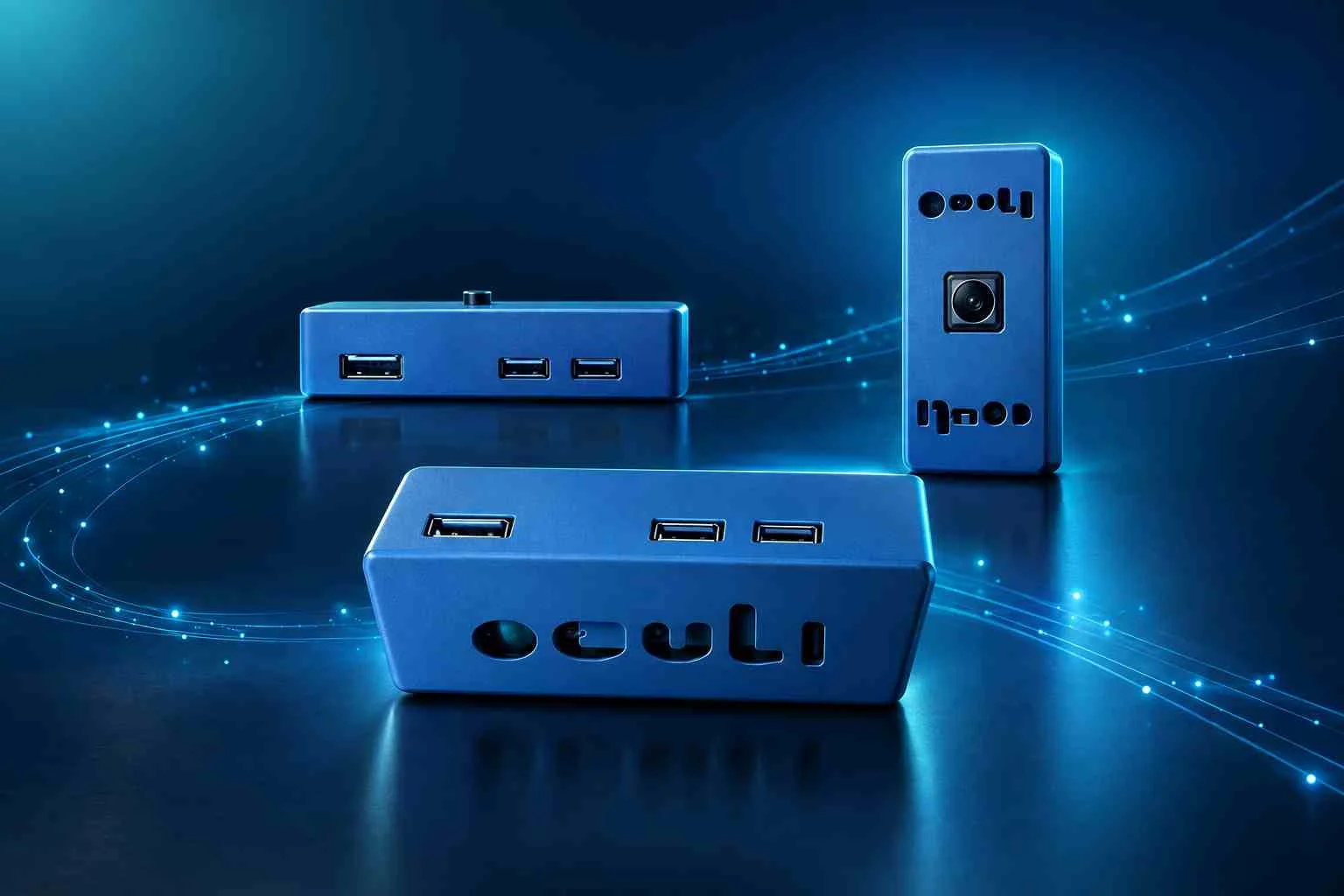
Oculi positions the OCULI SPU against camera-plus-computer systems on four things, and these make a sensible evaluation checklist for any low-power AI vision sensor: power draw, response time, privacy and programmability.
| What to Test | Oculi SPU Strength |
|---|---|
| Power | 100x lower power consumption for edge AI |
| Speed | 1,000x faster for edge AI |
| Energy x latency | 30x better for edge AI, 300x better versus cloud AI |
| Response time | Decisions at the point of capture, under 5 ms |
| Privacy | Personally identifiable information filtered before data leaves the device |
| Defense example | 30,000 FPS at under 0.3 W |
These are Oculi’s own figures from its website, so treat them as the starting hypothesis and use the evaluation to verify them on your workload. Oculi also reports more than 25 proof-of-concept deployments with customers.
The programmable part matters as much as the numbers. Because the SPU is a software-defined vision sensor with IntelliPixel in-sensor computing, you can adjust output modes and vision parameters in real time, so one chip can serve smart buildings, wearables, robotics and defense use cases.
How to apply to the Oculi evaluation program
Eligibility and first conversation
There are no formal eligibility requirements or technical prerequisites. Oculi looks for organizations with a genuine interest in evaluating its technology and exploring applications in their own products or solutions. In most cases, participation follows an introductory engagement with Oculi, such as a discovery meeting, product presentation or demonstration session. These conversations help match your objectives to the most appropriate evaluation program.
Application and intake process
Enrollment begins with an evaluation application form, available from the Evaluation Programs page (select Apply for Evaluation Program). The form captures company details, primary contacts, evaluation objectives, shipping and billing information, authorization approvals and the specific program you are requesting.
Non-disclosure agreement and team applications
Before enrollment is finalized, participants execute a non-disclosure agreement (NDA). The enrollment and NDA process applies to every evaluation offering, including the free software simulators. In most cases, one enrollment submission covers a company’s team. Larger organizations with several business units or independent project teams may be asked to submit separate applications, so each team’s evaluation objectives and requirements are properly documented.
How long the evaluation lasts
The standard evaluation period is one month. It includes onboarding, training and technical support, and during these first 30 days you have access to Oculi’s technical resources to install, configure and evaluate the platform.
Evaluation periods can be extended month to month depending on your requirements, project progress and mutual interest. Support beyond the initial phase is discussed case by case and may come as an extended evaluation or a separate proof-of-concept (POC) engagement. Because customer feedback is a key goal of the program, Oculi has historically taken a flexible approach to duration and support, especially when there is active engagement and ongoing collaboration.
Frequently asked questions
What is an AI vision sensor evaluation?
It is a structured test of how a sensor performs on your own scenes, models and power limits before you design it into a product.
Who is the Oculi evaluation program for?
Developers, engineers and technical teams building custom visual AI applications, at companies of any size.
Do I need hardware to start?
No. The free software simulators run on a laptop with its built-in or a USB camera.
What is the difference between Magenta and Burgundy?
Magenta is the general-purpose kit with a developer-friendly API. Burgundy is a specialized version of Magenta for presence detection.
Are there eligibility requirements?
No formal ones. Most participants begin with a discovery meeting, presentation or demo with Oculi.
Do I need to sign an NDA?
Yes, for every evaluation offering, including the simulators.
How long does an evaluation take?
One month as standard, with month-to-month extensions available.
What is a programmable vision sensor?
A sensor whose pixel-level processing and output modes can be tuned in software, so one chip serves different applications.
Ready to test it?
Apply to the Oculi Evaluation Program and see how the OCULI SPU performs on your application.