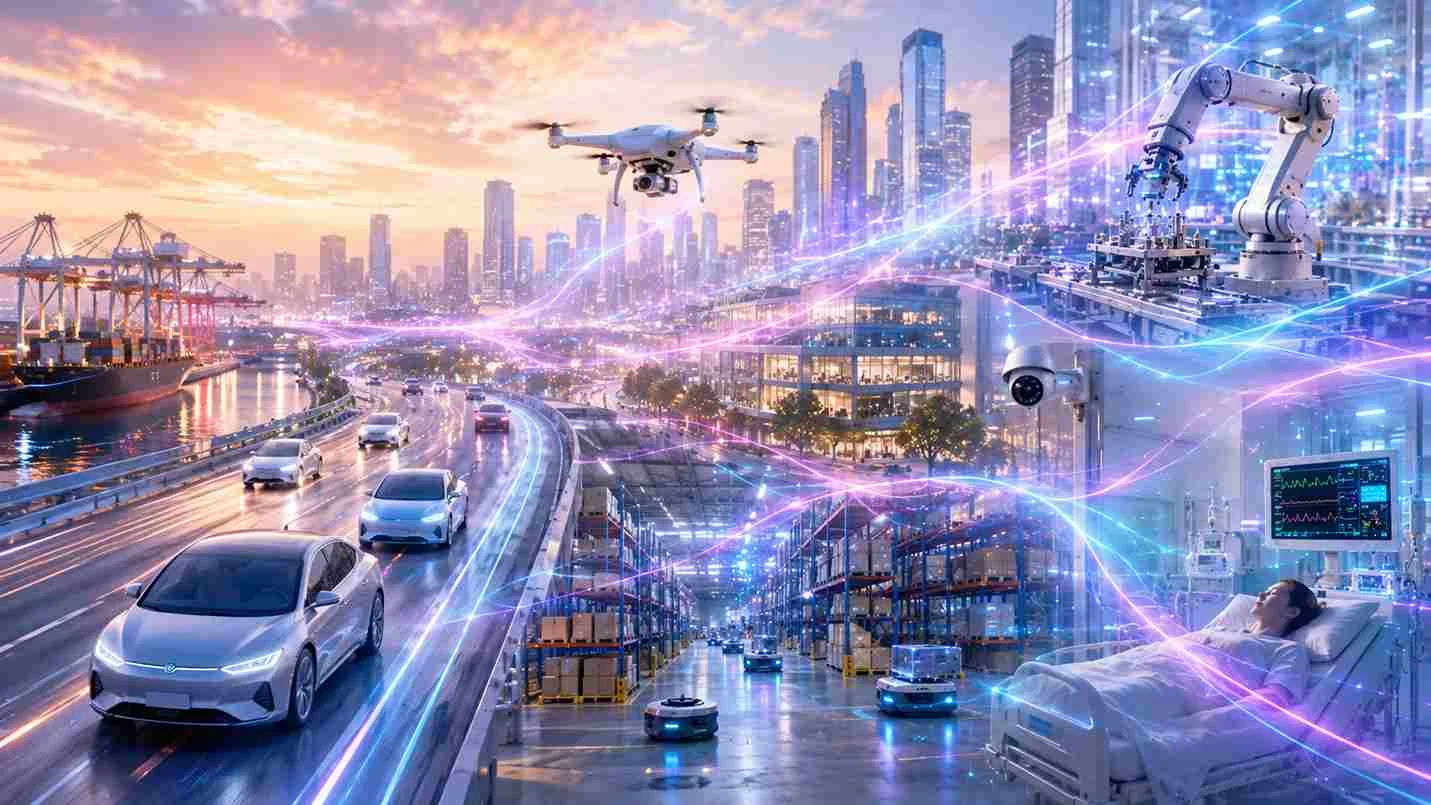

AI Vision sensors are evolving from devices that simply capture images into systems that can process visual information closer to the point of sensing. This shift is driven by the growing demands of edge AI applications, where bandwidth, latency, power consumption, privacy, and continuous operation can constrain conventional camera architectures.
Oculi approaches this problem through its OCULI SPU, IntelliPixel® in-pixel computing technology, and Software-Defined Vision Sensor™ architecture, which are designed to bring sensing and visual processing together at the sensor level, starting at the point of capture, the pixel.
In this guide, we explain how this approach differs from conventional machine vision architecture (image-sensor + compute), why in-sensor processing matters for edge AI, and what engineering teams should consider when evaluating it including where it may not be the right fit.
Oculi’s Core Technology
Oculi is a fabless semiconductor company building a general purpose AI Vision platform optimized for the edge . Its core product, the OCULI SPU (Sensing and Processing Unit), is a chip architecture that combines visual sensing and processing in a single unit rather than splitting them across a separate sensor and application processor.
Two technologies define how the SPU works:
- IntelliPixel® – Oculi’s patented in-pixel computing technology, which enables certain processing to occur at the pixel level.
- Software-Defined Vision Sensor™ – an architecture that allows the sensor’s behavior to be programmed and reconfigured for different applications and supports real-time optimization, rather than fixed at manufacture.
Together, these are intended to let engineering teams extract relevant visual information at the sensor, before it becomes a large data-movement or power problem downstream.
OCULI SPU vs. Conventional Sensor, Processor, and Memory Architecture
Building AI vision into a device traditionally requires three separate components working together: an image sensor to capture light and convert it into pixel data, a processor to run object detection, tracking, or classification, and memory to buffer and move that data between the two. Research on embedded AI vision systems has documented that this kind of downstream-processing approach commonly introduces data-access bottlenecks, added latency, and higher power consumption. Studies on near-sensor processing architectures have also shown that on-chip data movement is dramatically more energy-efficient than moving data off-chip to separate components, which is part of why each connection between sensor, processor, and memory in a traditional pipeline adds measurable power and latency overhead.
The OCULI SPU consolidates this into a single chip. Rather than pairing a conventional sensor with a separate processor and separate memory, the SPU integrated sensing, processing, and memory into one unit, so meaningful visual information can be extracted and acted on without routing full raw frames across multiple discrete components. This mirrors a broader shift documented in recent research on in-sensor and near-sensor computing, where placing processing and memory in close proximity to the sensor has been shown to reduce interface bottlenecks and minimize data movement compared to conventional multi-chip pipelines. Oculi technology is designed to reduce the number of components a system needs to achieve real-time vision processing, along with the board space, power, and data-movement overhead that come with connecting them. This applies across the SPU product line even a limited-capability SPU variant still integrates all three functions on a single chip, which a conventional sensor+processor+memory approach cannot do without additional components.
IntelliPixel®: In-Pixel Computing
In a standard sensor, every pixel is read out as a raw value and sent downstream for interpretation. IntelliPixel® is Oculi’s approach to in-pixel computing: enabling certain processing operations to happen at the pixel level, rather than exclusively after full-frame readout.
The practical effect is data reduction at the source. If meaningful visual information such as changes in a scene, or relevant features can be identified during sensing, the sensor doesn’t need to transmit and later re-process every raw frame in full. That distinction matters most for always-on applications, where a device needs to watch continuously without running a full video pipeline around the clock.
Software-Defined Vision Sensor™
A conventional image sensor primarily determines how light is captured and read out; its function is largely fixed once it’s designed into a product. A software-defined vision sensor adds another layer: the ability to change what visual processing occurs at the sensing stage, after the hardware has already shipped.
For OEMs, this can reduce how often a new sensor variant needs to be designed or qualified for each product configuration. One physical sensor can potentially support several use cases different detection tasks, different frame-rate or power profiles by changing what runs at the sensor level rather than changing the silicon.
Data, Latency, and Power Optimization with In-Sensor Processing
In-sensor processing is aimed at four recurring constraints in edge AI vision design:
- Data movement reading out and transmitting full-resolution frames at high frame rates consumes bandwidth and energy.
- Latency each hop between sensor and downstream processor adds delay, which matters for time-critical decisions.
- Power always-on sensing is difficult to sustain if every frame triggers full downstream processing.
- Design flexibility fixed-function sensors require new hardware variants for each application; programmable sensors do not.
These are the constraints the OCULI SPU, IntelliPixel®, and Software-Defined Vision Sensor architecture are built to address.
OCULI SPU Applications Across Edge AI Industries
Robotics and autonomous machines – Obstacle detection and navigation depend on short reaction times. Processing closer to the sensor can reduce the round-trip between capture and decision, support event-driven or always-on sensing rather than constant full-frame capture, and lower the processing load placed on a robot.
Smart buildings – Occupancy and presence sensing typically need to run continuously across many cameras. Local processing at the sensor can reduce the bandwidth required to scale across a building’s camera count, and can limit how much raw video needs to be centrally stored or transmitted.
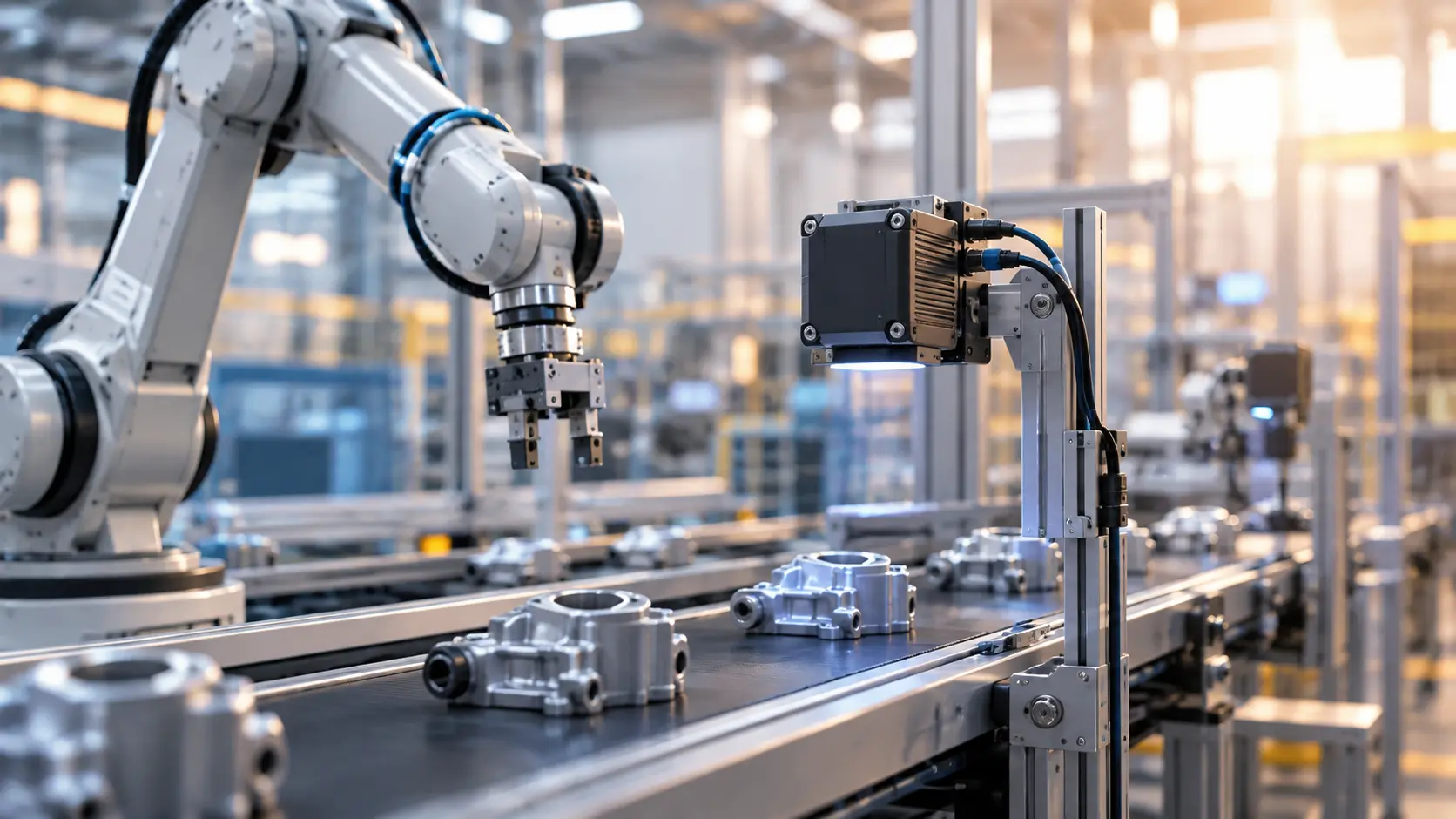
Industrial automation Visual inspection on a production line often requires a deterministic, predictable response time. Processing at the sensor can help keep that response local to the point of capture, which simplifies integration into systems where timing is tightly controlled.
Defense and unmanned systems. Platforms with strict size, weight, and power (SWaP) budgets often can’t accommodate a large separate vision processor. Reducing reliance on downstream processing is relevant here specifically because power and mass budgets are the binding constraint, not image quality alone.
Selecting the Right AI Vision Sensor Architecture
In-sensor processing tends to add the most value when power, latency, or data-movement are binding constraints on the design. That makes it a strong fit for battery-powered, always-on, or SWaP-limited products, and a less obvious fit for a few other cases:
- Applications built primarily around image quality and resolution, such as photography-grade pipelines that rely on extensive downstream image signal processing.
- Systems already running on stable power with generous compute and bandwidth, where latency isn’t a meaningful constraint.
- Workloads that are better suited to a general-purpose or highly parallel processor than to sensor-level computation.
- Early-stage products still define requirements, where a standard sensor-plus-processor reference design offers more flexibility to iterate.
The right starting point is mapping the application’s actual power budget, latency target, and data-movement requirements, then evaluating whether sensor-level processing addresses those specific constraints.
Transforming Vision Processing at the Sensor Level
Reading about a sensor architecture is one thing; testing it against a specific application’s constraints is another. Oculi’s Evaluation Programme is designed for engineering teams who want to assess the OCULI SPU, IntelliPixel® technology, and Software-Defined Vision Sensor™ capabilities against their own power budgets, latency targets, and integration requirements before committing to a design decision.
Conclusion
AI vision sensor technology is increasingly about deciding how much processing should happen at the sensor itself, not just how good the sensor’s image quality is. For engineering teams working on robotics, smart buildings, industrial automation, or SWaP constrained defense platforms, that decision has direct implications for latency, power, and data movement and it isn’t the right fit for every design.
If your team is weighing in-sensor processing against a conventional image sensor and processor pipeline, the next step is to explore Oculi’s Evaluation Programme or contact Oculi to discuss your specific application.
Frequently Asked Questions
What is an AI vision sensor?
An AI vision sensor combines image sensing with visual processing to analyze information closer to the point of capture. This can help reduce data movement, latency, and downstream processing requirements in edge AI systems.
How does an AI vision sensor differ from a conventional image sensor?
A conventional image sensor captures pixel data and sends it to a separate processor for analysis. An AI vision sensor can perform selected processing at the sensor level, reducing the amount of data that needs to be processed downstream.
What is in-sensor processing and why does it matter?
In-sensor processing performs selected vision operations within the sensing system rather than relying entirely on a separate processor. This can help reduce bandwidth, latency, and power consumption in applications that require continuous visual processing.
What is IntelliPixel® in-pixel computing?
IntelliPixel® is Oculi’s patented in-pixel computing technology. It enables certain visual processing operations to occur at the pixel level, helping extract relevant information before large amounts of raw data are moved downstream.
What is the OCULI SPU?
The OCULI SPU, or Sensing and Processing Unit, combines visual sensing and processing in a single unit. It is designed to support edge AI applications where power, latency, and data movement are important considerations.
What is a Software-Defined Vision Sensor™?
A Software-Defined Vision Sensor™ allows the sensor’s processing behavior to be programmed or adapted for different applications. This can provide greater flexibility than sensors with entirely fixed processing functions.
Can in-sensor processing reduce power consumption?
In-sensor processing can reduce power consumption by limiting data movement and reducing the amount of downstream computation required. The actual savings depend on the application, workload, sensor configuration, and overall system architecture.
Which applications can benefit from AI vision sensors?
AI vision sensors are well suited to applications where low power, low latency, or continuous visual processing is important. Common examples include robotics, industrial automation, smart buildings, autonomous machines, and other edge AI systems.
When is a conventional image sensor a better choice?
A conventional image sensor may be a better fit when image quality, high resolution, or extensive downstream image processing is the primary requirement. In-sensor processing is most valuable when power, latency, or data movement are significant system constraints.
How can engineers evaluate the OCULI SPU?
Engineers can evaluate the OCULI SPU against their specific power, latency, bandwidth, and processing requirements. Oculi’s Evaluation Programme is designed to help teams assess whether sensor-level processing is suitable for their application.